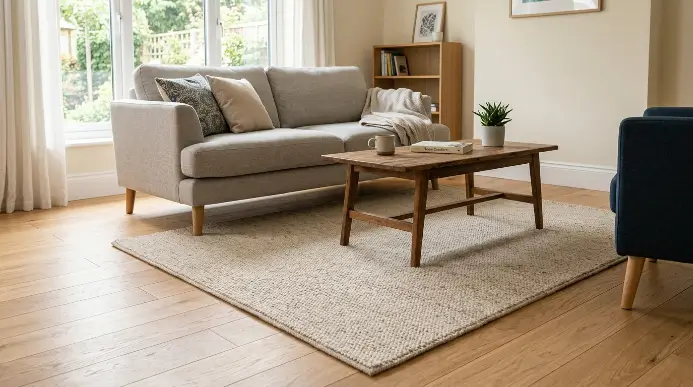
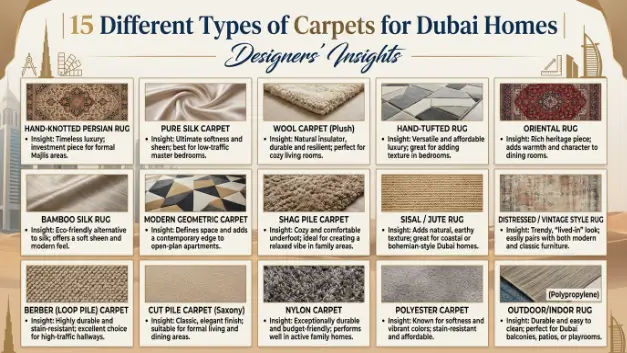
15 Different Types of Carpets for Dubai Homes | Designers’ Insights
Choosing the wrong carpet in Dubai costs more than the carpet itself.
A wool carpet installed in a room adjacent to an open balcony degrades within two seasons. A cheap nylon laid in a Palm Jumeirah villa looks exactly as cheap as it is. A beautiful Persian rug placed under a dining table without proper underlay will start curling at the edges within months and in a rental property, that comes straight out of your deposit.
Most carpet guides give you a list. This one gives you what actually matters for Dubai: which materials survive the climate, which styles belong in which rooms, and what realistic budgets look like for each category in 2026.
How Carpets Are Categorised
Before diving into specific types, it helps to understand the four ways carpets are classified:
- By material: wool, nylon, sisal, polypropylene
- By construction style: cut pile, loop pile, cut-and-loop
- By usage area: bedroom, living room, kids’ room, outdoor
- By installation method: wall-to-wall, carpet tiles, area rugs
The right choice depends on your room’s humidity exposure, foot traffic level, whether you own or rent, and the finish standard of your property. Run through all four before committing.
Types of Carpets by Material
1. Wool Carpets
Wool is the benchmark material in Dubai’s luxury residential segment. It holds colour well through air-conditioning cycles, regulates underfoot temperature better than any synthetic, and carries a finish quality that premium villa projects in Dubai Hills Estate, Emirates Hills, and MBR City rely on for bedrooms and formal reception rooms.
The trade-off is cost and maintenance.Wool carpets in Dubai typically range from AED 180 to AED 450 per square metre for supply and installation, depending on pile weight and weave. They also require professional cleaning not a DIY job in humidity exposed locations like JBR or Palm Jumeirah, where salt air accelerates fibre deterioration if cleaning is neglected.
For owner-occupied villas and high-end apartments, wool is the right answer. For rental units where durability and turnover cost matter more, keep reading.
2. Nylon Carpets
Nylon is the workhorse material, and it earns that reputation across Dubai’s residential market. It handles foot traffic better than any other synthetic, resists crushing in high-use areas, and responds well to stain treatments. For families in Business Bay, Dubai Marina, or townhouses in JVC, nylon is the most practical choice for living rooms, hallways, and children’s rooms.
Supply and installation in Dubai runs between AED 60 and AED 130 per square metre. The quality gap between the low and high end of that range is significant a dense, tightly-woven nylon at AED 120 outperforms cheap wool at AED 180 in pure durability terms. Always specify pile weight before ordering.
3. Sisal Carpets
Sisal is a natural plant fibre that works in Dubai when placed correctly. Its texture is coarser than wool or nylon, which makes it unsuitable for bedrooms where barefoot softness is the priority. Where it performs well is in home offices, entrance hallways, and formal reception areas in villas — spaces where natural material aesthetics and texture carry more weight than underfoot comfort.
The Dubai-specific caveat: sisal absorbs moisture. In ground-floor units or rooms with direct outdoor exposure, it is not the right choice.Sisal carpet in Dubai performs best when paired with a waterproof underlay and installed strictly in climate-controlled interiors.
Types of Carpets by Style
4. Cut Pile Carpets (Velvet Carpets)
Cut pile is the standard picture when people think of soft residential carpet individual fibres cut at the tips, standing upright, creating a smooth, even surface. In Dubai’s interior design market, this is the dominant style for bedroom installations across high-end builds, from Emaar handovers in MBR City to custom villas in Al Barari.
Density determines everything here. The denser the pile, the more luxurious the feel and the higher the price. A quality cut pile velvet carpet installed in a Dubai villa bedroom typically costs between AED 140 and AED 380 per square metre.
5. Berber Carpets
Berber is a looped pile construction where fibres form continuous loops rather than being cut. This gives the surface a textured, slightly firm finish that handles wear exceptionally well. It belongs in home offices, studies, and staircases in townhouses and villas where durability outweighs softness.
One known weakness: looped fibres can snag. In households with pets or young children, a snagged loop can unravel a section of carpet. For those environments, a cut-and-loop hybrid is the safer specification.
6. Cut and Loop Carpets
Cut and loop combines both fibre types in the same surface, creating textured patterns that handle foot traffic well and hide dirt effectively between cleans. For family living rooms in communities like Jumeirah Village Circle, Arabian Ranches, or DAMAC Hills, cut and loop delivers a practical balance of durability and visual interest that plain cut pile cannot match.
7. Ribbed Carpets
Ribbed carpets use a linear, ridged weave that produces a durable, flat surface. They work well in transitional spaces hallways, corridors, and staircases where deep pile would flatten quickly under constant foot traffic. In Dubai apartments where hallways are narrow and heavily used, a ribbed carpet handles the wear without deteriorating.
Types of Carpets by Usage Area
8. Residential Carpets
The residential category covers everything in a private home, but it is not uniform. A bedroom carpet and a staircase carpet need entirely different specifications. The first decision in Dubai’s residential market is whether the property is owner-occupied or rented. Owner-occupied villas and penthouses support investment in wool or premium nylon. Rental apartments warrant mid-grade nylon durable enough for repeated tenancies, affordable enough to replace without financial strain between handovers.
9. Bedroom Carpets
The bedroom is where underfoot softness outweighs every other factor. A cut pile wool or premium nylon in a deeper pile creates a warmth underfoot that tile and hardwood cannot replicate particularly relevant in Dubai, where air-conditioning keeps interiors significantly cooler than outside temperatures.
Colour selection matters here as well. Lighter tones show dust faster in Dubai’s climate. Mid-tone carpets with natural pile variation hide everyday dust between cleans more effectively than pale options.
10. Living Room Carpets
Living rooms need the balance between appearance and durability. This is the highest-traffic room in most Dubai homes more entertaining, more daily use, more exposure to spills and movement. A cut-and-loop nylon or a dense wool blend at mid pile height is the right specification for fitted carpet.
Area rugs over hard flooring are also a strong option here. They define the seating zone, protect the permanent floor, and can be removed for professional cleaning without the disruption of a full carpet replacement. For rental properties especially, an area rug is the more flexible long-term choice.
11. Kids’ Room Carpets
Stain resistance and softness are the two non-negotiable specifications for a child’s room. In Dubai, where indoor play replaces outdoor activity for much of the year due to heat, a kids’ room carpet takes constant punishment.
Solution-dyed nylon is the right material colour runs through the fibre rather than sitting on the surface, which means stains clean off rather than setting into the dye. A medium pile height balances softness with practical cleaning. Budget: AED 55 to AED 100 per square metre installed.
12. Outdoor and Balcony Carpets
Dubai’s climate eliminates most standard carpet options from outdoor use entirely. UV exposure, sustained heat, and occasional rain mean only purpose-made outdoor carpets or artificial grass will last more than one summer.
Outdoor carpets for Dubai balconies are made from UV-stabilised polypropylene and can handle direct sun and rain without fading or structural deterioration. For balconies in Marina, JBR, or Bluewaters apartments, outdoor carpet is one of the most practical and cost-effective finishes available typically AED 45 to AED 90 per square metre installed.
Types of Carpets by Installation Method
13. Wall-to-Wall Carpets
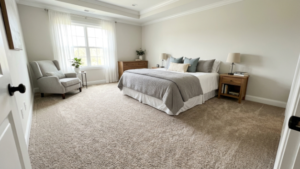
Wall-to-wall carpet is fitted across the entire floor area, secured with gripper rods at the perimeter. It is the right installation method for bedrooms and studies where a seamless, fully covered finish is the goal.
In Dubai apartments and villas, wall-to-wall installation typically adds AED 15 to AED 30 per square metre to the supply cost. If existing tile or hardwood flooring needs to be removed first, factor in the additional removal and disposal costs before finalising the budget.
14. Carpet Tiles
Carpet tiles are individual modular squares typically 50cm × 50cm laid across a floor that can be replaced individually if damaged or stained. They are standard in commercial spaces but have gained real traction in Dubai home offices and children’s rooms because of their practicality.
If one tile takes a permanent stain, you replace that tile, not the entire floor. Supply and installation typically runs AED 50 to AED 110 per square metre and the ability to spot-replace sections means the lifetime cost is lower than a comparable fitted carpet over five or more years.
15. Area Rugs
An area rug is not fitted it sits on top of existing hard flooring and defines a zone within a room. In Dubai, area rugs are the most flexible carpet option available. They move with you when you relocate, can be sent for professional cleaning and returned, and allow you to change the look of a room without touching the permanent floor which matters significantly in rental properties where tenant modifications are restricted under RERA guidelines.
Persian and Turkish area rugs also function as long-term investments at the luxury end of the market. Hand-knotted pieces hold or appreciate in value over time, unlike fitted carpet which depreciates from the moment it is installed.
How to Choose the Right Carpet for Your Dubai Home
Run through these four questions before specifying anything:
- What is the room’s foot traffic level?
High traffic hallways, living rooms, kids’ rooms needs a durable fibre (nylon or wool blend) at a low to mid pile height. Low traffic areas like guest bedrooms can support a deeper, more luxurious pile. - What is the room’s humidity exposure?
Ground-floor units, balcony-adjacent rooms, and coastal properties need moisture-resistant options. Natural fibres like sisal without proper underlay protection are a real risk in these locations. - Do you own or rent the property?
Owners can invest in premium materials confidently. Tenants under a standard RERA tenancy contract should verify what flooring modifications are permitted before committing to any fitted installation. Area rugs require no landlord approval and remove any risk of deposit dispute. - What is the realistic total budget?
Material cost and installation cost are separate line items. A carpet shop priced at AED 90 per square metre in a 30-square-metre bedroom is AED 2,700 in material alone. Add AED 600–900 for installation, underlay, and gripper rods. That is the real number to plan around.
Frequently Asked Questions
Which carpet material lasts longest in Dubai’s climate?
Nylon outperforms other synthetics in durability. Wool lasts equally long when maintained correctly, but requires professional cleaning and is sensitive to moisture. In a sealed, properly maintained environment, wool carpets last 15 to 20 years. Nylon, with regular domestic cleaning, lasts 10 to 15 years.
What does carpet installation cost per square metre in Dubai?
Installation runs from AED 15 to AED 35 per square metre, depending on room complexity and whether old flooring needs to be removed first. Material supply ranges from AED 45 per square metre for basic synthetic to AED 450 or above for premium wool. Budget both figures separately.
Can tenants in Dubai install fitted carpet in a rental apartment?
Under RERA’s standard tenancy contract, structural modifications require landlord written approval. Fitted wall-to-wall carpet using gripper rods falls in a grey zone some landlords permit it, others do not. Area rugs require no approval and are the safer route for tenants who want carpet without risking deposit disputes at checkout.
Are outdoor carpets suitable for Dubai balconies?
Yes but only purpose-made outdoor polypropylene carpet or artificial grass. Standard residential carpet will deteriorate within one summer on a Dubai balcony due to UV and heat. UV-stabilised outdoor carpet at AED 45–90 per square metre installed is the correct specification.
What carpet type is best for a kids’ room in Dubai?
Solution-dyed nylon with a medium pile height. The dye runs through the fibre, so stains clean off the surface rather than setting. Avoid looped pile (Berber) in children’s rooms loops snag on toys and can unravel.
Need help choosing the right carpet for your home or office?Carpet Master offers free measurement, expert installation, and same-day delivery across Dubai. Browse the full range from office carpets and sisal options to carpet tiles andcustom wall-to-wall installations.